


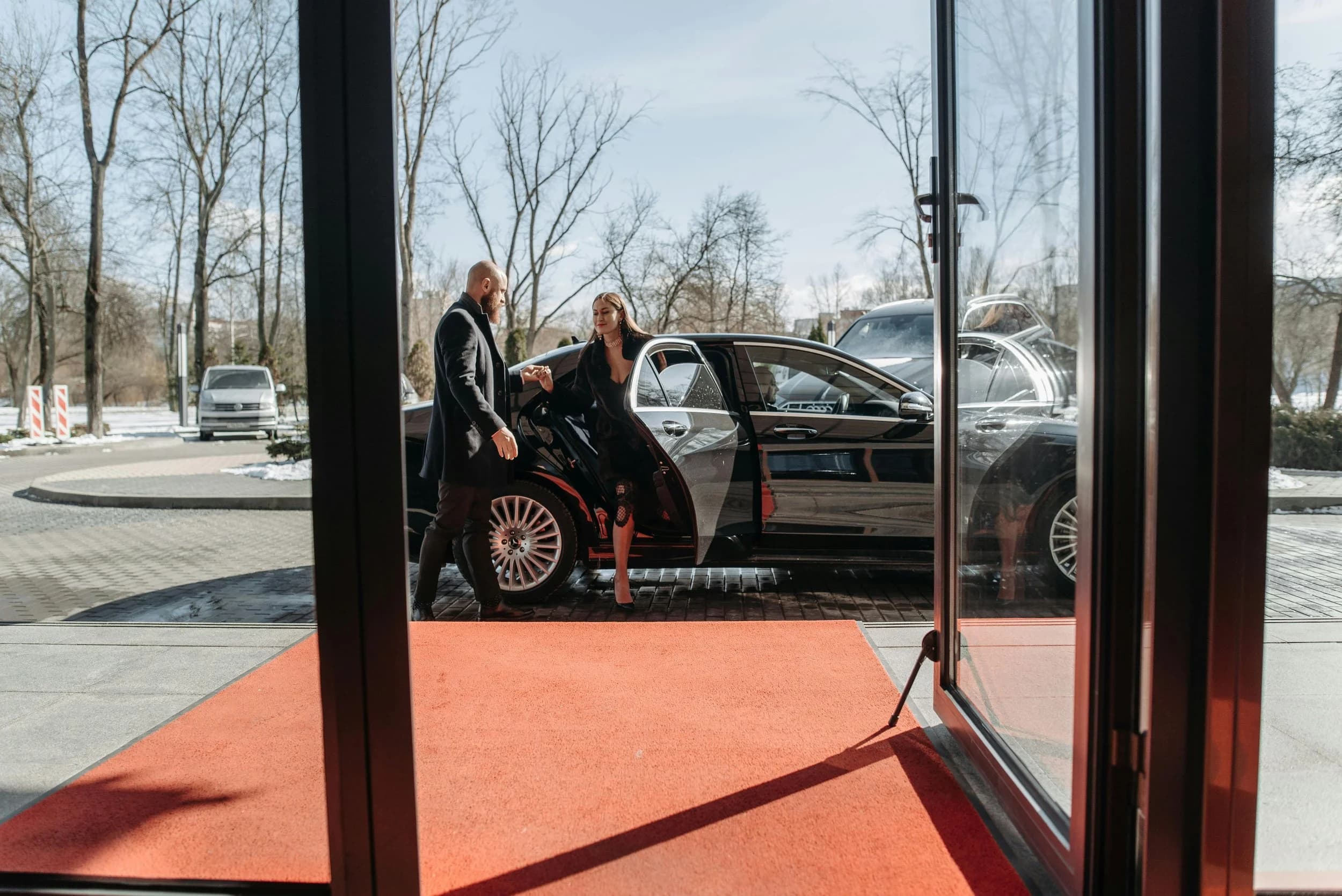
Wedding transport is rarely the part couples think about first, yet it decides whether the day runs on time. Swiss weddings often involve a civil ceremony in one place, a church or lakeside blessing in another and a reception somewhere with a view, which means several moves in a single day on roads that can be narrow, winding or busy. A good transport plan is mostly about timing and communication, and the earlier it is written down, the calmer the day becomes.
Start with the timeline, not the cars
Before choosing vehicles, write the day as a list of moves: where the couple prepare, where the ceremony is held, where photographs happen, where the reception takes place and when guests need to be collected or returned. Add the real travel time for each leg, and then add a buffer. Photographs, hair and make-up and family arrivals nearly always overrun, so a plan with no slack on the first leg has already failed by midday.
Share this timeline with every supplier at once. The planner, the photographer, the venue coordinator and the chauffeur company should all be reading the same version, with one person responsible for changes. Most transport problems at weddings come from two people holding two different times.
Also decide who owns each handover. The photographer needs to know when the couple will leave the preparation venue, the venue needs to know when the first guests will arrive, and the driver needs to know which door to use and where to wait. Writing a name next to every handover turns a vague plan into a plan that someone is responsible for.
The bridal car and the couple's journey
The couple's car is as much a photographic moment as a vehicle. Decide how the arrival will work: where the car stops, which side the door opens on, and where the photographer stands. A dark, immaculate limousine with a chauffeur who understands that the next few minutes are being photographed is worth more than elaborate decoration. If you plan to decorate, ask what is acceptable before the day, since ribbons and flowers need to be fitted so they do not damage the paintwork or obstruct the driver's view.
Think about the dress and the train. Getting in and out of a car in a full gown is easier with a wide door opening and a driver who waits and helps, rather than one who is checking a phone. Keep water, tissues and a small repair kit in the car, and ask the driver to hold the car at a discreet distance until the couple are ready.
Plan the first few minutes after the ceremony as well. Many couples want a short private drive before joining their guests, a quiet moment to breathe and perhaps a stop for photographs at a viewpoint. Build this into the timeline from the start, and tell the driver how long the stop should last so that the reception is not kept waiting.
Multiple venues and guest shuttles
When the ceremony and reception are in different places, guest transport becomes the hardest part. Count the guests who need it, think about who is elderly or travelling with small children, and decide whether a single shuttle loop is enough or whether two vehicles on a fixed schedule would reduce waiting. A printed card in each guest's welcome pack, showing pick-up points and times, saves hundreds of questions.
Swiss villages and vineyard estates often have limited parking and sometimes single-track access roads. Ask the venue where larger vehicles can stop and turn, and let your transport company know in advance. The same applies to hotels in town centres, where drop-off zones can be tight. A driver who has already seen the access road will not be improvising on the day.
For international guests, add the arrival side. People flying into Geneva or Zurich often need a transfer to their hotel before the wedding, and a clear arrival schedule makes it easier to plan shuttles in groups. Collect flight details early, and give guests a single contact number for transport questions.
Weather, mountains and contingency plans
Swiss weather changes quickly, especially near the lake and in the mountains. A lakeside ceremony that is planned outdoors needs a covered alternative, and your transport plan should assume that guests will be arriving in rain. Agree in advance with the venue and the chauffeur whether umbrellas will be provided, where the cars can pull up under cover and how a delayed ceremony would shift the pick-up times.
If the wedding is at altitude or involves a long approach road, leave more time and check conditions the day before. Winter weddings may need extra margin for snow and ice. Keep a contingency contact, ideally a single phone number answered by someone who can move vehicles, so that a delay does not turn into a chain of phone calls.
A simple rule helps: every outdoor moment has an indoor alternative and every move has a second route. Share the plan B with your planner and your driver as a short written note, so that if the weather shifts on the morning of the wedding, nobody needs to reinvent the day in a hurry.
Working with your planner and the chauffeur team
If you have a wedding planner, give your transport company a single point of contact at the planner's office and agree how changes will be communicated. Confirm the details a few days beforehand: names, phone numbers, pick-up addresses, the exact order of cars, and what the driver should do if the couple are late or early. Ask for the driver's name and number so the planner can reach them directly on the day.
Do not forget the end of the evening. Late returns, early departures and the journey to the hotel are easy to leave until the last moment, and guests who have been drinking will appreciate a clear, safe plan. Decide who is staying where, group them by direction and set departure times.
SPLT can arrange wedding transport in Switzerland around your schedule, from the couple's car to guest shuttles, and is glad to work alongside your planner on the timeline.
Experience it with a private chauffeur
We can take you there in comfort, on your own schedule.

